
Products
Automated-Governance, Risk and Compliance (GRC )
Welcome to the central hub for managing governance, risk and compliance withing our organization. Stay informed, proactive and aligned with business and regulatory expectations
Product Offering
Are You Prepared for the Unknown?
Audit
Impenetrable defenses, easy access for you.
Risk Register
Impenetrable defenses, easy access for you.
Compliance Dashboard
Impenetrable defenses, easy access for you.
Third-Party Risk Assessment
Impenetrable defenses, easy access for you.
Compliance Dashboard
Impenetrable defenses, easy access for you.
Risk Register
Impenetrable defences, easy access for you.
Audit
Audit
Impenetrable defences, easy access for you.
GRC Overview
Why GRC Matters?
- Promotes ethical behavior and decision-making across the organization.
- Prevents operational, financial, reputational, and compliance risks.
- Ensures preparedness for audits, inspections, and certifications.
- Builds a culture of responsibility and continuous improvement
Discover Solutions for Proactive Security
At Auriseg, we offer a comprehensive suite of proactive security services designed to address the full range of your organization’s security posture. All of our security assessments include complimentary mitigation guidance, retesting, and a money-back guarantee. Your security is our top priority: our seasoned engineers possess leading security certifications such as CISSP, CISM, CISA, and more.
Governance, Risk, and Compliance (GRC)
Governance, Risk, and Compliance (GRC) is not just a framework – it’s a strategy that brings clarity, structure, and control to the way organizations operate. It ensures that all departments work in harmony to meet goals, manage uncertainties, and remain within the bounds of regulations and internal policies.
Why GRC Matters?
- Promotes ethical behavior and decision-making across the organization.
- Prevents operational, financial, reputational, and compliance risks.
- Ensures preparedness for audits, inspections, and certifications.
- Builds a culture of responsibility and continuous improvement
Key Outcome Of An Effective GRC Program?
- Reduced risk exposure
- Faster and more informed decisions
- Stronger stakeholder confidence
- Better resource and policy alignment
Risk Register
The Risk Register is your organization’s single source of truth for tracking known and potential risks. It helps leadership and teams to stay ahead of issues that could negatively impact operations, projects, people, or finances.
Why GRC Matters?
- Identified risks across departments (IT, HR, Finance, Operations, etc.)
- Categorization of risks (strategic, operational, reputational, cyber, legal)
- Risk evaluation metrics such as likelihood and impact
- Control measures and mitigation strategies
- Periodic reviews and updates to reflect current realities
How It Helps You
- Offers transparency and accountability
- Enables timely responses to risk indicators
- Aligns risk management with organizational strategy
- Prepares you better for audits, reviews, and incidents
- Periodic reviews and updates to reflect current realities
Compliance Dashboard
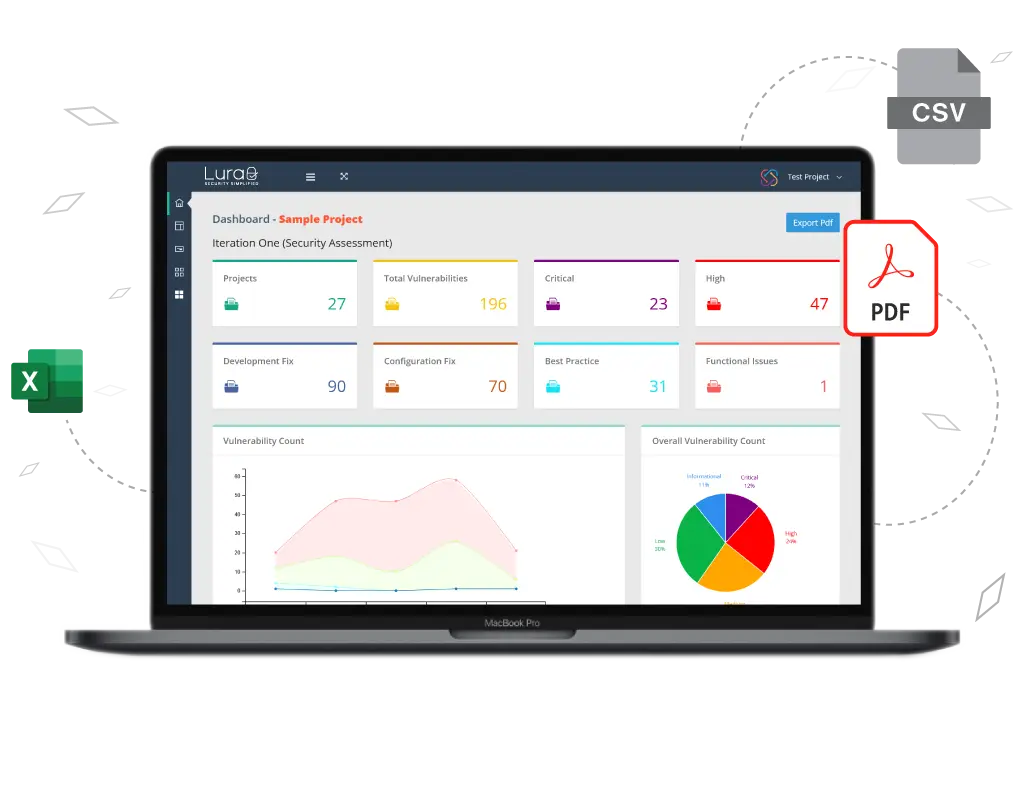
The Compliance Dashboard provides a real-time snapshot of how well your organization is meeting internal policies and external regulatory requirements. It transforms complex compliance data into easy-to-understand visuals and metrics for decision-makers.
Typical Elements in a Compliance Dashboard
Audit Status
Ongoing, completed, or pending internal and external audits
Policy Compliance
Employee acknowledgment rates for policies (eg., Code of Conduct, Data Protection)
Control Effectiveness
How well current controls are preventing or mitigating risks
Regulatory Tracking
Compliance progress for major regulations (GDPR, SOC, HIPAA, ISO)
Non-Compliance Alerts
Open findings, overdue actions, and compliance gaps
Third-Party Risk Management (TPRM)
Third-Party Risk Management focuses on understanding and mitigating the risks introduced by external vendors. suppliers, partners, and service providers.
Why TPRM Is Crucial?
- Many data breaches and service disruptions originate from third-party relationships.
- Regulatory frameworks like GDPR, ISO 27001, and HIPAA require organizations to assess vendor risk
- Business continuity depends on the reliability and security of partners.
What TPRM Involves?
- Pre-engagement due diligence and risk assessment
- Vendor classification (critical/non-critical, high/low risk)
- Review of compliance certifications (e.g. ISO. SOC 2)
- Periodic reassessments and contract renewals/offboarding
- Continuous monitoring for breaches, contract lapses, or non-compliance
Get In Touch
Are You Prepared for the Unknown?
Our Proactive Security Services identify and mitigate vulnerabilities in your software, ensuring secure development, deployment, and operation of applications across your organization.