

“Spiderman” Automated Phishing Attack Disrupts Middle East Businesses
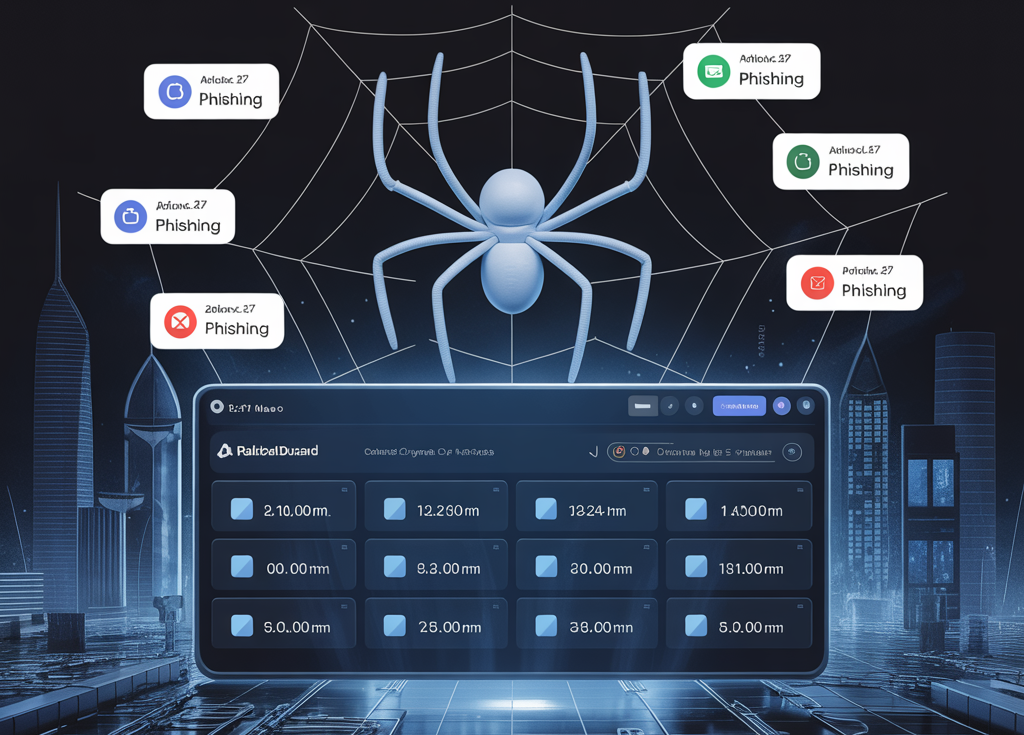
Middle East organizations are facing organized, automated threats that scale instantly and bypass traditional defenses. A new cybercrime kit dubbed Spiderman since it weaves “an extensive web of attacks,” Through a single interface, threat actors can launch their attack campaigns, steal passwords and 2FA credentials, and manage all captured data. Making financial and bank enterprises a significant threat to the impacted organization and their customers. Here’s what you need to know about Spiderman-as-a-service.
Automated Phishing as a Service
Enterprise phishing used to require custom scripting and technical knowledge. Today, full-stack kits like Spiderman provide a go-to-implement phishing framework that automates:
- Creation of realistic login page replicas for dozens of major services.
- Capture of credentials, credit card info, and OTP/PhotoTAN codes.
- Real-time session monitoring and data exfiltration.
It dramatically increases attack velocity while lowering the attacker’s required skill level, turning phishing into a scalable, profitable service for newbie cyber criminals.
Behind Spiderman-as-a-service
Most of the regular phishing templates only targets single entities, modern kits:
- Consolidate multiple targets into one dashboard.
- Automate generation and deployment of phishing pages.
- Include anti-detection filters that evade scanners and security tools.
- Capture multi-factor authentication tokens in real time.
This means your enterprise is up against business-model-level cybercrime infrastructure than a isolated phishing links.
Inside the Effective Issue
Enterprise leaders must understand why these threats work:
- Brand trust exploitation: Users are far more likely to engage with realistic login replicas.
- Authentication bypass: Real-time OTP/2FA capture makes the practical protective measure into liability.
- Credential reuse consequences: Stolen corporate credentials can cascade into full network compromise.
So organizations need to work towards identity and session security rather than regular perimeter protection.
Impact on Enterprise Security
When these phishing kits are deployed at scale, especially through social engineering campaigns the impact can be severe:
- Unauthorized access to sensitive systems.
- Escalation to lateral movement in your network.
- Data exfiltration and compliance violations (e.g., GDPR, PDPL, local UAE cyber law).
- Reputational damage and loss of stakeholder trust.
Attackers utilizing automated tools can strike fast, wide and without obvious intrusion footprints.
How the Issue Acts in Real-time
In practical terms:
- Employees receive phishing emails that look official (with company branding or legitimate-looking URLs).
- A user enters credentials, and the attacker instantly captures them.
- The attacker then uses those credentials to access corporate tools, cloud apps, or VPNs.
- By the time the breach is detected, critical systems may already be compromised.
Because this threat evades many legacy detection systems, many breaches only become apparent once significant damage is done.
How Virtura Can Help Your Organization
As a regional cybersecurity partner focused on enterprise protection across the UAE and Middle East, Virtura offers well-customized security services that directly mitigate phishing-based threats:
Advanced Managed Detection & Response (MDR)
- Real-time threat hunting and anomaly detection.
- Rapid containment of phishing campaign attempts.
Identity-First Security
- Continuous identity and session monitoring beyond perimeter defenses.
- Multi-factor authentication hardening and risk-based access controls.
User Awareness & Simulation
- Phishing simulation programs to strengthen user vigilance.
- Adaptive training triggered by real threat patterns.
- Regional threat context and dark-web monitoring.
- Tailored alerts to executive and enterprise risk profiles.
Benefits to your organization
- Reduced risk of credential compromise
- Compliance with local and international data protection regulations
- Minimized impact from phishing and automation-based attacks
- Strategic insight into evolving threat landscapes
What Should I Do Now?
If your enterprise has not yet assessed its phishing resilience or cannot confidently answer how you’d detect and respond to automated phishing attacks:
- Start with a risk assessment focused on identity security and phishing readiness.
- “Review your MFA strategy” ensures phishing-resistant mechanisms are in place.
- Implement continuous monitoring and incident response tooling that correlates identity risk with network activity.
Failing to act today means exposing your digital infrastructure to attacks that scale like never before.
We’ll personalize the session to your organization’s specific data security needs and answer all your questions.